“Figure it out.”
If I was ever facing a challenge while growing up, when I approached my father for help, he would often use the phrase “Figure it out”. He rarely told me how to solve the problem, only advised me if I requested his opinion, and mostly allowed me to learn by doing. With my first flat tire in our 1965 Volkswagen Bug while driving on the 55 freeway, I found the nearest phone booth and called him in distress. As this was our first car (I shared it with my sister), I had never changed a tire. I was hoping for some assistance. He told me about the spare and said, “Figure it out.” My eyes widened; I sighed heavily, and I proceeded to figure it out. All these little empowerments established a belief that if I put my mind to something, I can accomplish it. It doesn’t mean I won’t ask for help; it just means I won’t ask someone else to figure it out for me.
A year after my father passed away, I received a request to make a half-circle curtain rod out of round tubing to hold a heavy curtain inside the door of a restaurant. The curtain’s purpose was to keep the cold wind from blowing in every time the door opened. This seemed like a straightforward request; however, bending tubing requires special tools that keep the tubing from kinking. My father had mentioned a tool in a box under the workbench, a “Hossfeld Bender”, that he had not set up yet…this was the tool I needed for the job. I pulled the heavy box from beneath the bench, removed the dusty pieces, and just stared at the multitude of parts. It was not exactly a plug-it-in-and-use-it type of tool. It needed to be assembled, cleaned, bolted to the bench, and then I would examine the moving parts and maybe know how to put it to use. My father was not standing there assisting me, but he was there, in the air, smiling and whispering, “Figure it out.”
The shipping weight of this tool is 118 lbs. Imagine me hauling all the parts to the workspace, finding a spot with enough room to bend long pieces of steel, assembling the bender, drilling mounting holes, crawling under the table to mount it, and then reading the manual to understand how to use it. All the while wondering if it was going to work. Parts were missing, but they somehow reappeared after I asked my Dad for a little help. I like to think he was enjoying seeing the bender assembled and put to use. It is quite a machine! After a few test runs, I started on the curtain rod. The Hossfeld Bender proved to be the correct tool for the job. No heat necessary, just physics and physical strength. I bent the tubing to the specifics. I designed and crafted the mounting hardware and completed the project. A few weeks later, after receiving photos of the curtain rod in place, I took a few moments to thank my father for the gift he gave me. Grateful for empowering me to just “figure it out”.
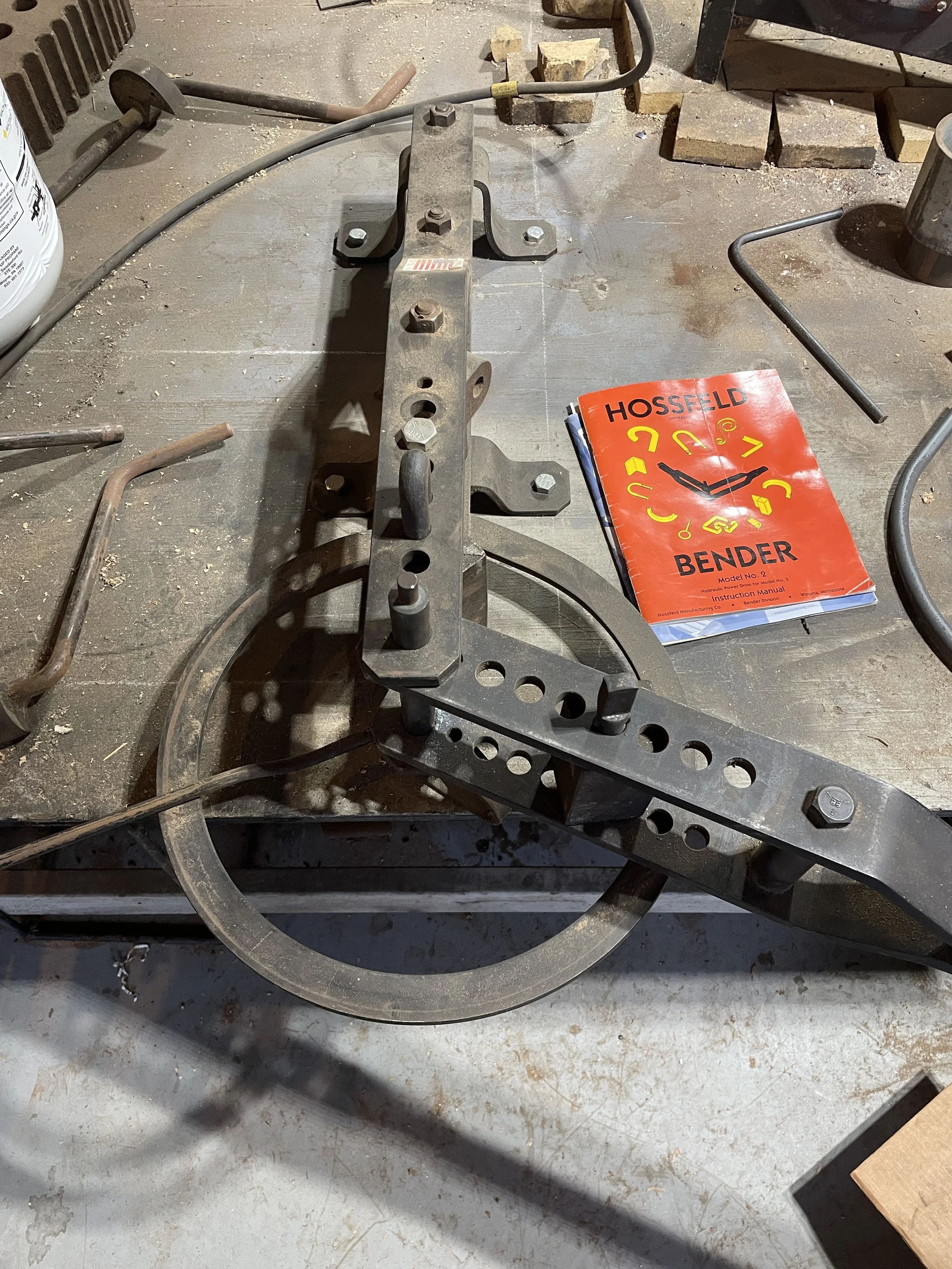
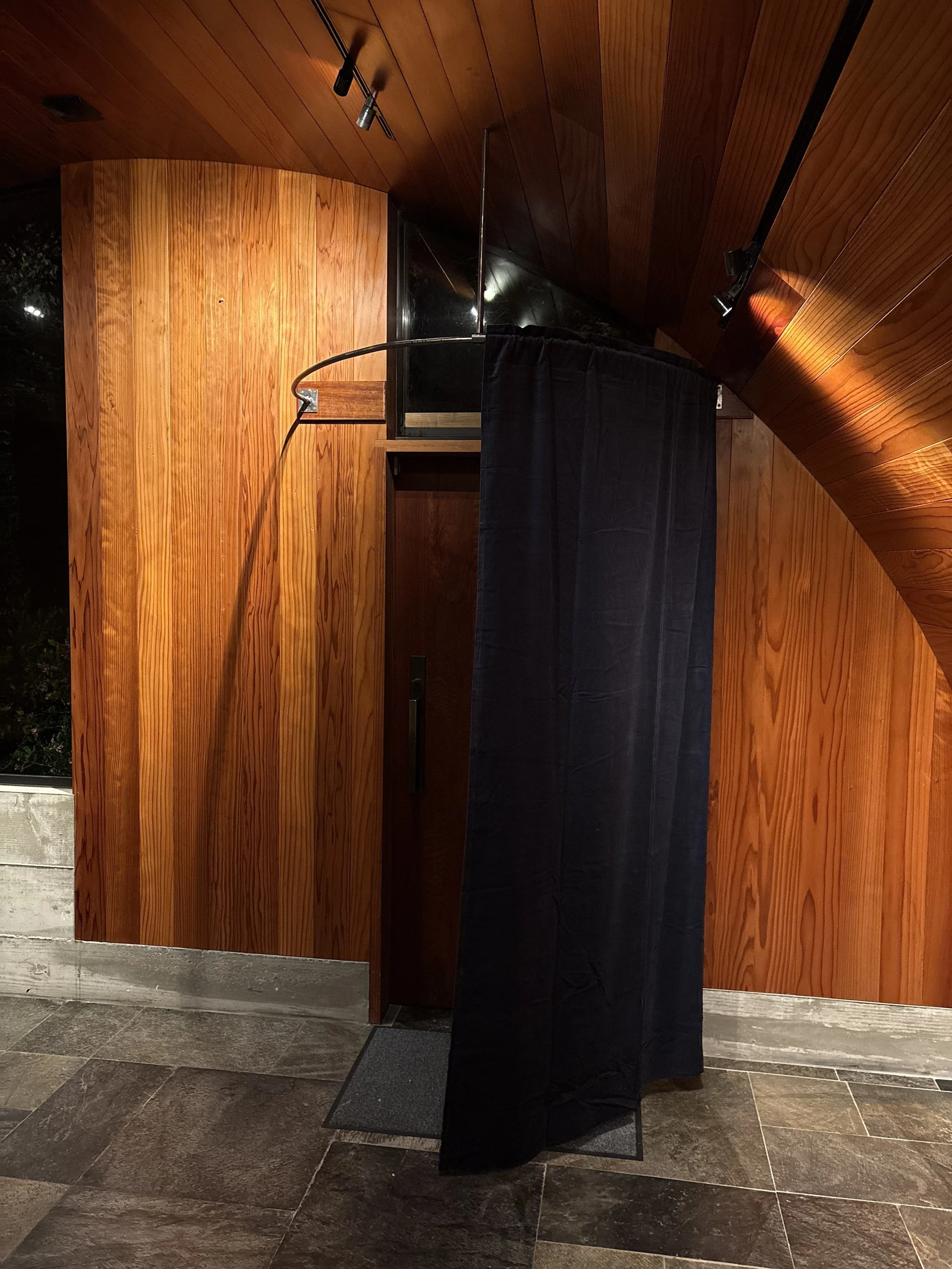
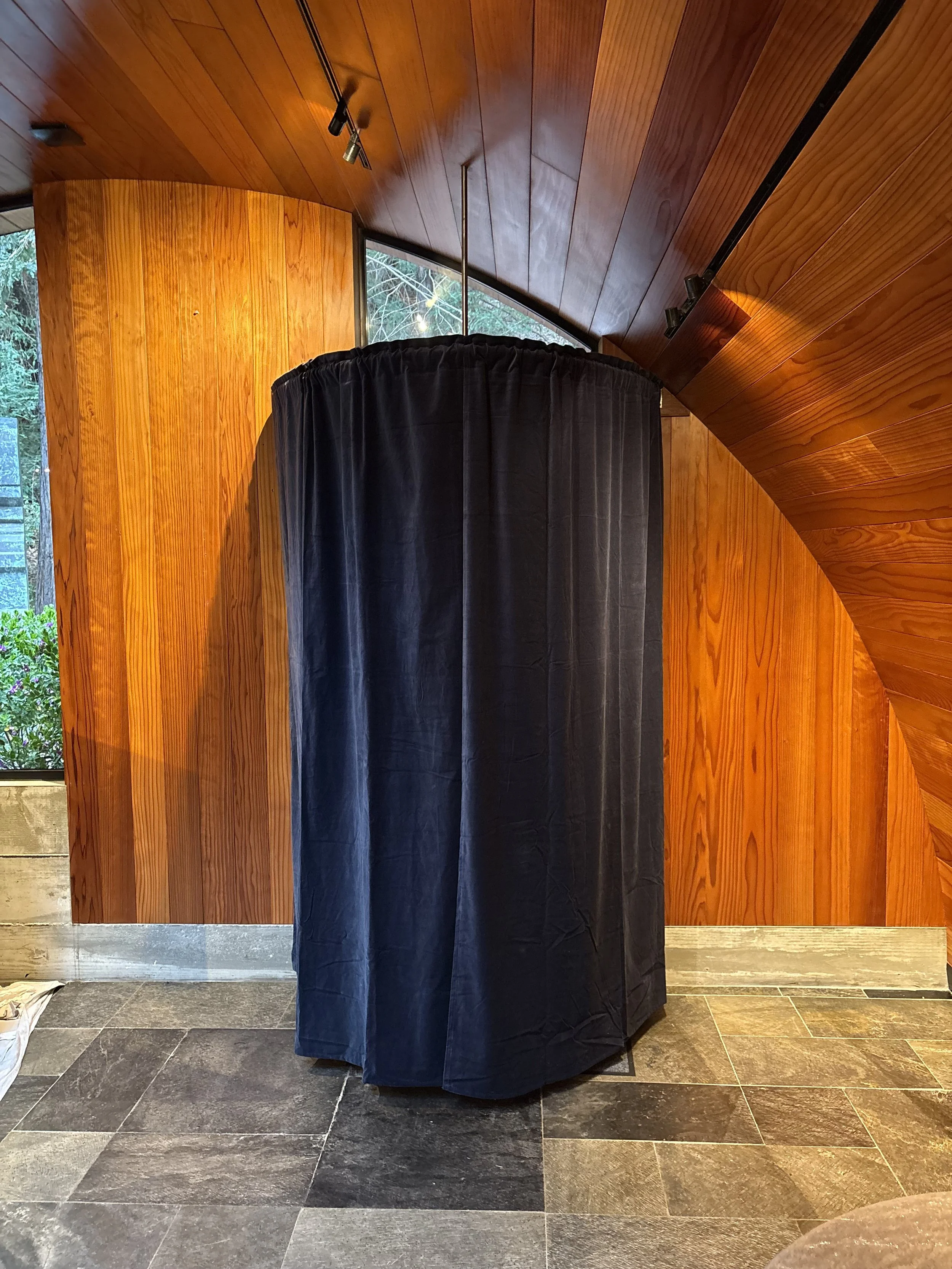
The bender in place and the curtain rod installed.